Blog Poster Agent.
Picks a city, writes the SEO blog post, publishes — never repeating.
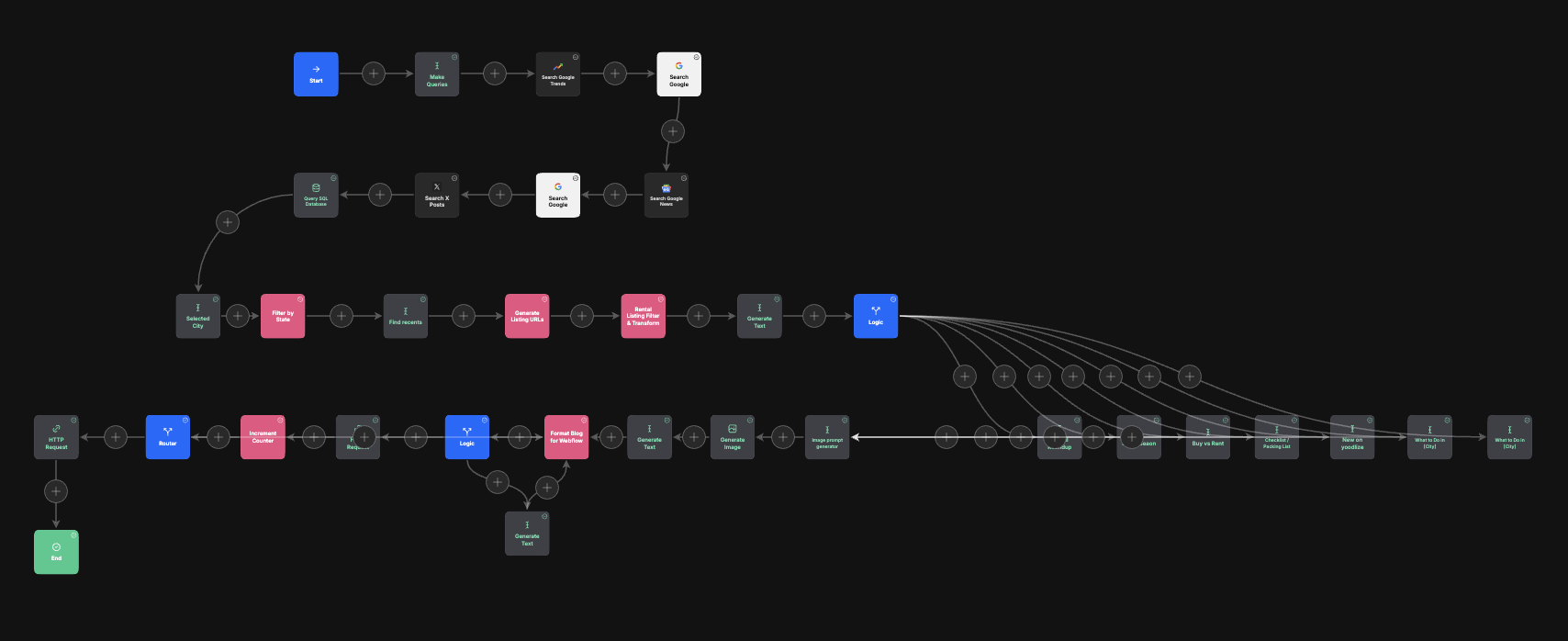
BuildPost subflow — filtering, listing block, hero image, internal links, brand voice
End of run
A complete, on-brand, city-specific blog post is live, headline, hero image, embedded listing block, internal SEO links, body copy in the right brand voice. The publish job logs which city was used and when, so the next run picks a city the agent hasn’t touched recently.
22 published versions, $0.50 a post, 4 minutes per run. Five models doing five different jobs.
Challenges it solves
Don’t write the same post twice. Before generation, the
Make Anti-Prompt step pulls the running list of recently
covered cities from a Google Sheet and turns it into negative
constraints, the writing model sees “don’t repeat these
angles for these cities.” The publish step writes the new
city + date back to the sheet so the constraint set keeps
growing.
Stay on brand at length. Long-form blog generation tends
to drift toward generic SaaS-speak by paragraph three. A
dedicated Step on Brand pass enforces the brand’s voice
across the whole draft, and a PromptCleaner step strips
any accidental meta-language before the post is finalized.
Real internal linking, not LLM-guessed links. The
GenerateInternalLinks step queries the product’s existing
post catalog from Google Sheets, then has the LLM weave only
real, extant URLs into the body, never fabricates an SEO
anchor.
Right model for each job. Claude Opus handles the long-form writing where quality matters most. Claude Haiku runs the cheap filter/classify steps. Gemini handles images. Sonnet picks up the medium-complexity reasoning in between. The blended cost lands at $0.50 a post instead of $2+.
What I’d change next
The hero and inline images are AI-generated today. I’d swap that for real customer photos of actual listings. Two reasons: authenticity, real photos of real items build more reader trust and convert better, and SEO risk: search engines are tightening scrutiny of AI-generated imagery, so leaning on it is a liability for an SEO-first engine. The agent already pulls live listing data for the embedded listing block, so it would source images from that same data instead of generating them. That cuts the image-generation step entirely, drops cost per post, and removes a model from the stack.
Under the hood
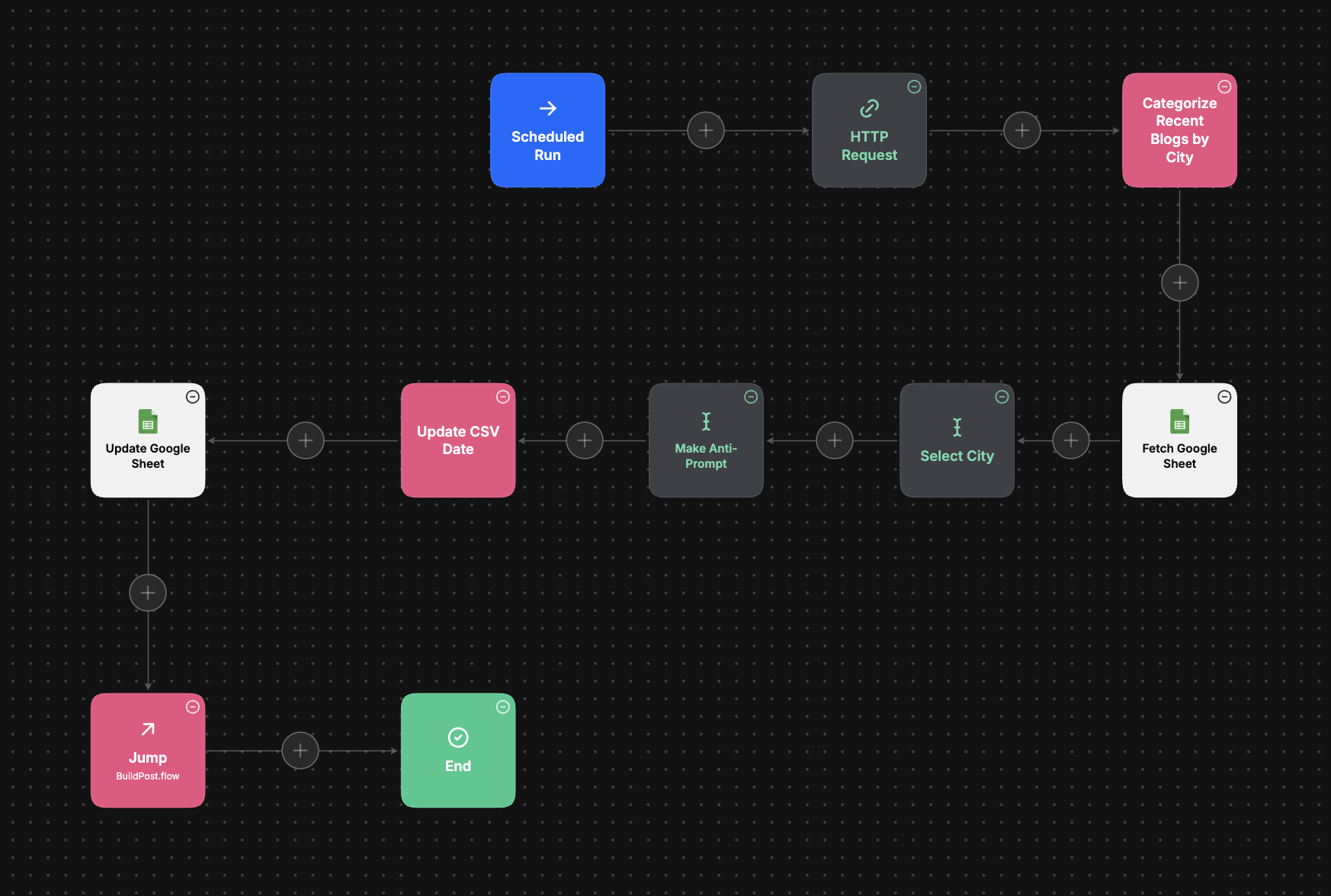
Two workflows. Main.flow orchestrates the scheduled run:
Scheduled Run → HTTP Request → Categorize Recent Blogs by City → Fetch Google Sheet → Select City → Make Anti-Prompt → Update CSV Date → Update Google Sheet → Jump (BuildPost.flow) → End.
BuildPost.flow is the generation pipeline, ~30 nodes covering
research, listing block assembly, hero image generation, internal
link weaving, brand-voice enforcement, and final formatting.
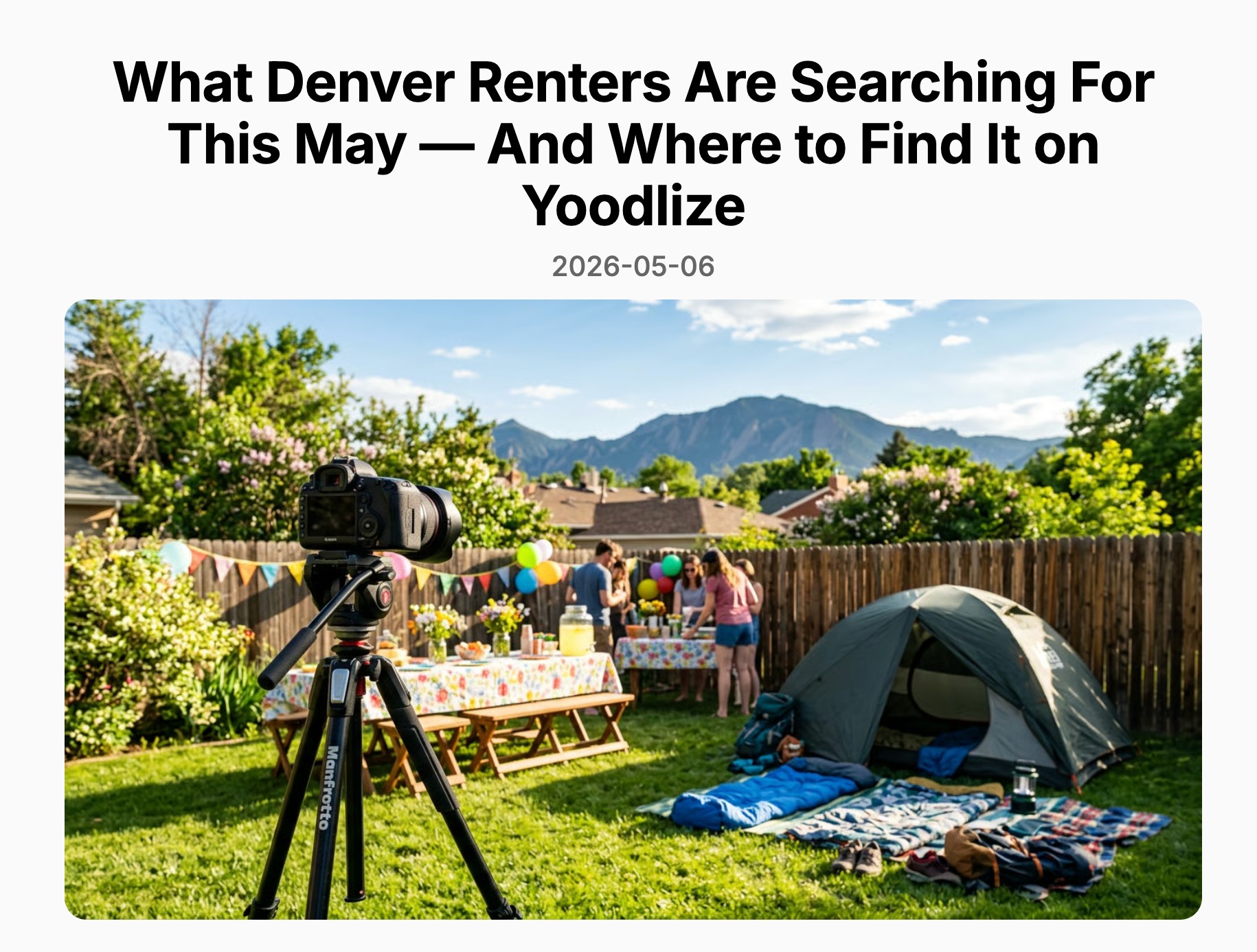
Denver renters are searching for party supplies, camping gear, and more this May. Find peer-to-peer rentals near you on Yoodlize in Denver, CO.